.svg)
.svg)


알라미 앱을
다운받아보세요
다운받아보세요
QR코드를 촬영하시면
앱을 다운 받을 스토어로 이동합니다.
앱을 다운 받을 스토어로 이동합니다.

%201.svg)

Ad monetization is a core revenue model for most app publishers. Delight Room, the team behind Alarmy, has grown fast on the back of its own ad monetization playbook.
But most publishers fix their attention on first-order metrics like impressions, eCPM, and revenue, and miss the things underneath. Those things shape an app's ad revenue and user experience for years, yet plenty of teams overlook them. This post covers what publishers most often miss in the monetization process.
Many teams treat ad-related changes as lighter than a normal feature update and ship them to every user without enough verification.
That's a mistake. Mobile ad monetization tangles multiple ad SDKs together with the ad logic that decides when an ad shows, and it all rides on the unusual constraints of an app update: once you ship, you can't fix a problem until the next release. So ad changes demand more care than most major feature launches, not less.
When a broken monetization change rolls out to 100% of users, the first thing a publisher hits is lost ad revenue. Ads that should load don't, so monetization stalls. Ad-related bugs degrade the experience. And in the worst case, a faulty SDK or logic change crashes the app and pushes users to churn.
Fixing this starts with process. First, build a QA process for ad-related changes that scrutinizes ads as closely as product changes, or more. A small company may find a heavy process hard to carry, but even a basic one prevents problems before they happen.
We also strongly recommend staged rollouts. Google Play Console and App Store Connect, the store platforms for Android and iOS, both let you release an app to users gradually. The exact features differ by OS, but the concept is the same: ship to a small group first, then raise the rollout percentage as the app proves stable. If an issue shows up, you stop the rollout at a small percentage and prepare the next release.
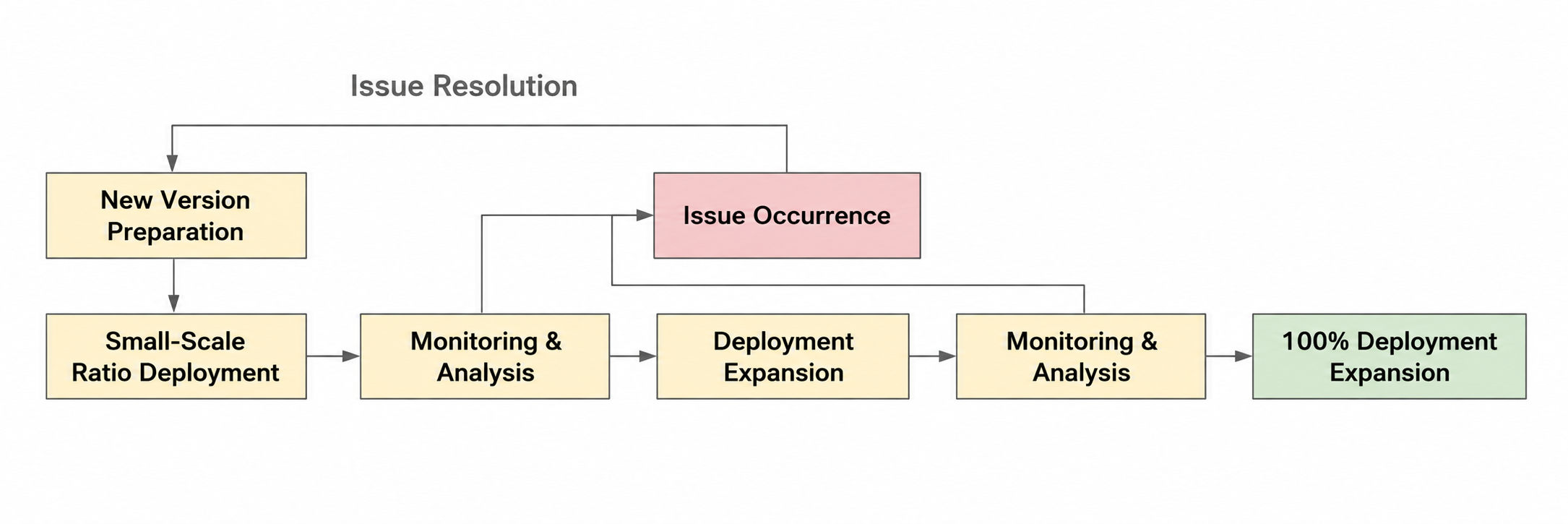
A staged rollout keeps an issue from turning into a major problem.
A/B testing is essential too. Even a change with a high chance of success can hit an unforeseen problem and hurt revenue. With an A/B test, you can compare the real impact of a change, and if something goes wrong, the control group's revenue is protected. That's a far more stable release environment.
Integrating mediation and ad network SDKs means more than just adding an SDK. Publishers typically use a mediation platform to sharpen ad revenue, and install several ad networks alongside it.
Here's the key point: mediation SDKs and ad network SDKs connect to each other through adapters, exchanging data inside the app as they run. Because the connections are this intricate, each SDK team works to support compatible versions.
But mediation platforms and ad networks are separate companies building SDKs toward different goals, so compatibility between them breaks often. Say network A releases a new version to support the latest mediation SDK, but network B never built support for that mediation SDK version. The result: those three SDK versions can't run together.
So before you run three or more SDKs together, check that every one of them is compatible and working. Publishers naturally benefit from running many SDKs (more demand, more revenue), but install them blindly with only that in mind, and revenue quietly drops while crashes start appearing.
An obvious revenue drop or crash is actually the lucky case. You stop the rollout, revert, and stop the bleeding fast, because the cause is easy to find. The bigger problem is a revenue decline that happens gradually, a slow slide downhill. Mediation fills the gap left by a struggling network with other networks, so the change comes on slowly. When this happens, many teams never find the cause and write it off as a natural drop in demand.
The risk runs deep, so monetization means checking continuously that each network integrates and stays compatible with the others. One SDK update affects the rest, so you have to audit every other SDK and verify versions to head off a bigger problem. It's tedious, but checking each one is the path to maximizing revenue.
The piece publishers most often miss in ad monetization is managing app-ads.txt and SKAdNetwork IDs. It can look like a simple technical setting, but it ties directly to your app's ad revenue.
app-ads.txt is a text file that names the authorized sellers of ads in the programmatic ecosystem. IAB Tech Lab introduced it as a standard to prevent ad fraud and make ad trading transparent. A missing or misconfigured file causes serious problems. Advertiser bidding gets restricted, which drives eCPM down. It can also shrink programmatic trading volume, or, in the worst case, get your inventory mistaken for fake ad inventory, with a devastating effect on ad revenue.

iOS has a similar piece of information to manage: SKAdNetwork IDs. Since iOS 14.5, SKAdNetwork has been the only way to measure ad performance on iOS while protecting privacy. Managing SKAdNetwork IDs well is central to measuring the performance of campaigns aimed at iOS users accurately and to helping advertisers optimize those campaigns. It's how you optimize ad revenue on the iOS platform.
Manage SKAdNetwork IDs poorly, and iOS campaigns suffer from inaccurate performance measurement. Campaign optimization gets harder, and advertisers cut their budgets. Doubt about ad quality grows, advertiser trust drops, and a long-term partnership becomes hard to build.
Managing these two files well takes a systematic approach. For app-ads.txt, set a monthly review schedule and update it the moment a new ad network partner is added. Sync regularly with your mediation partner and build automated validation to make management more efficient.
To manage SKAdNetwork IDs, keep an up-to-date ID list per ad network and update the Info.plist file on a regular schedule. When onboarding a new ad network, use a checklist so nothing slips through, and track every change carefully with version control.
Communication with ad networks matters too. Use regular partner meetings to respond quickly to new policies or requirements, and secure a point-of-contact channel that resolves issues fast when they come up. Set up a documented communication process for every change, and manage it systematically.
This technical management can look simple, but it matters more and more in the programmatic ecosystem. As privacy demands rise and ad fraud prevention grows in importance, complying with these technical standards is no longer optional. Build a systematic management system and monitor it regularly, and you optimize how these technical details affect your app's monetization.
Ad monetization is more complex than showing ads and generating revenue. The three things above matter as much as the performance metrics on the surface, and manage them poorly and you hold back your app's growth over the long run.
Successful monetization takes a comprehensive view of these elements and a systematic management system. Technical details like mediation and ad network SDK version management, app-ads.txt, and SKAdNetwork IDs become far easier to manage with the right tool. DARO monitors and manages these complex technical details automatically, so publishers can focus on the product itself while maximizing revenue.
Rather than chasing short-term numbers, use the right tools to build and run a sustainable monetization strategy. That's what supports an app's long-term success.










.png)


