.svg)
.svg)


알라미 앱을
다운받아보세요
다운받아보세요
QR코드를 촬영하시면
앱을 다운 받을 스토어로 이동합니다.
앱을 다운 받을 스토어로 이동합니다.

%201.svg)
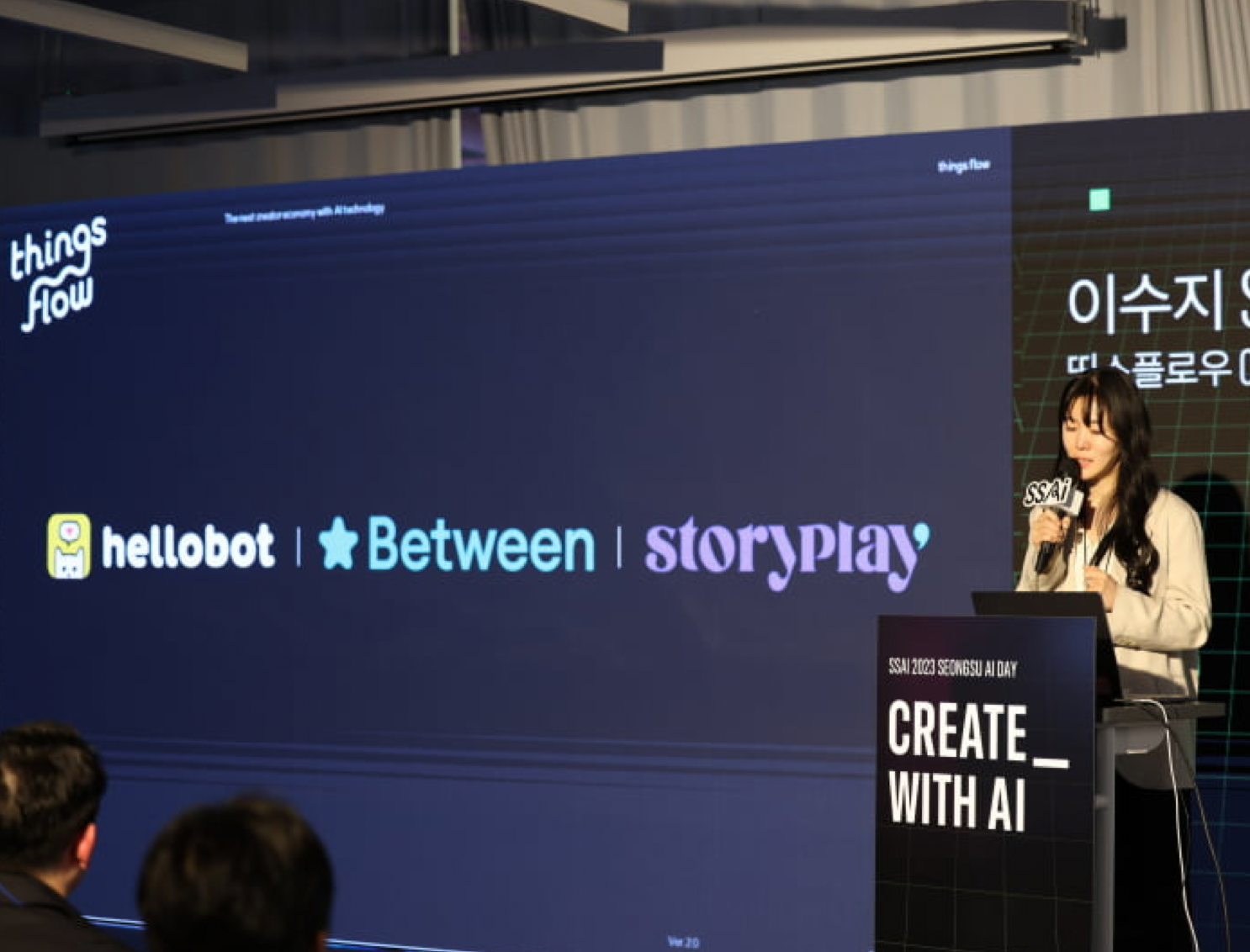
Between, used by 25 million couples worldwide. Hellobot, an AI chatbot that has exchanged over a billion messages. Thingsflow runs two very different apps, and both carry the same concern.
"We want to raise ad revenue, but we want to protect the user experience."
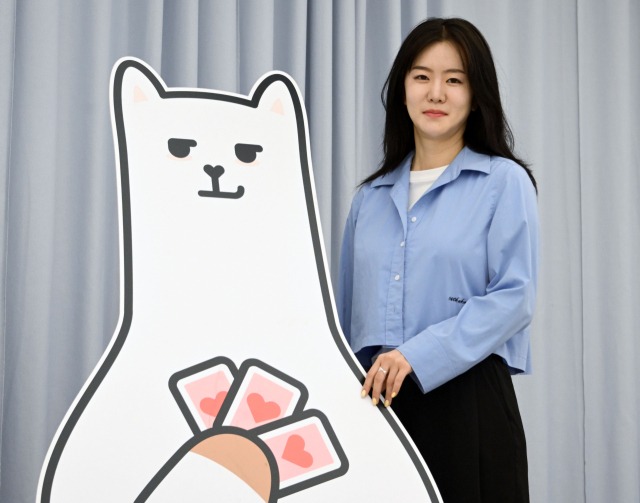
Thingsflow CEO Suji Lee has built her services on the belief that user experience comes before technology. In 2024, the company posted three straight months of profitability, a rare result in the AI chatbot market. Adding ads lifts revenue, but it can break the UX. We sat down with Lee to talk about how she found the balance.
Hello, I'm Suji Lee, CEO of Thingsflow. We run two apps, Hellobot and Between.
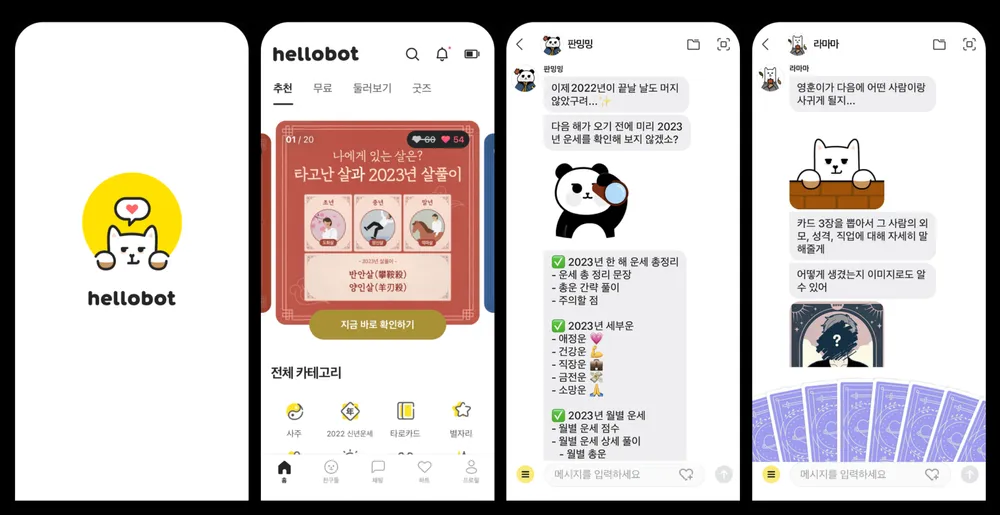
Hellobot is an AI chatbot service. Its signature character is a tarot chatbot named Lamama. When you're lonely, bored, or down, you can get a tarot reading, take a psychological assessment, or just chat. So far, users and chatbots have exchanged more than a billion messages.
Between is a couples app launched in 2011. More than 25 million couples worldwide use it, and it's especially popular across Asia, in markets like Japan and Taiwan.

Yes. Both offer most of their features for free, so in-app ads are the main revenue source. But UX is at the heart of both apps, which made monetization hard.
Between is an intimate conversation space for couples. A jarring ad suddenly appearing there breaks the mood. The same goes for Hellobot. Users come to it when they're lonely or down, and an ad cutting into the middle of a conversation breaks the experience.
Thingsflow has always built its services on the belief that user experience comes before technology. So adding ads raised revenue but broke the UX, and protecting the UX capped monetization. That dilemma was always there.
Early on, Thingsflow used AdMob mediation for monetization. But as the user count grew, the limits started to show.
With Hellobot, as the user base expanded, impressions rose, but eCPM kept slipping. Ad revenue couldn't keep pace with user growth. The team wanted to optimize further, but AdMob mediation alone could only go so far.
Especially with Between. Adopting programmatic ads raises monetization efficiency, but it carries the risk of showing jarring or inappropriate ads.
Because it's a couples app, users react more sensitively to ad quality. Two people are talking, and a strange ad suddenly appears. Trust in the app drops. Strict quality control was a must.
Thingsflow wanted to use several ad networks at once for revenue optimization. Integrating a range of ad networks brings more advertisers into competitive bidding, which lifts the overall eCPM.
But that's genuinely complex on the technical side. Each ad network uses its own SDK, so integrating them all grows the app size, hurts performance, and raises maintenance costs. The biggest problem: the networks update their versions constantly, and compatibility often broke. For a team that wants to focus on content and user experience, that was a heavy burden.
Thingsflow was looking for a solution that could raise revenue without hurting UX. The team wanted to leave the technical side, ad optimization, to experts and focus on content and user experience.
DARO is a solution Delight Room built on the know-how it gained running Alarmy. Alarmy is an app where user experience matters too. That gave Thingsflow confidence.
Hellobot's eCPM rose by about 60%. DARO manages a range of ad networks and demand together, so impression opportunities get distributed automatically to advertisers offering higher bids. Performance was noticeably better than with AdMob.
Between was even more dramatic. Ad revenue grew 2.8x.
The DARO team analyzed in-app user behavior data and proposed the optimal ad placements. The chat screen showed the highest ad revenue potential, but DARO didn't simply add a placement. It also considered a format and position that wouldn't get in the way of users typing messages.
The chat screen now places ads naturally between messages, with ad visibility adjusting to the scroll behavior. So even with revenue up 2.8x, there was almost no VoC complaining about the added placement.
This was a real worry. Adopting programmatic ads inevitably exposes you to jarring ads. With Between being a couples app, it was an even more sensitive point.
DARO runs an AI-based ad quality management system. The bad ads that the system alone can't catch, DARO blocks every day with human resources. Thingsflow also receives a weekly report of blocked ads, so the team can see which ads are being filtered out.
Being able to keep high ad quality without cutting eCPM much was a big advantage.
A single DARO SDK manages a range of ad networks together, so the development team's efficiency improved a lot. Adding another ad network takes no separate SDK integration work. The team adds it from the DARO dashboard.
Thingsflow is a team that wants to focus on content and user experience. Instead of spending resources on ad optimization, the team can focus more on story tech and AI feature development.
If you run a service where UX is the core, monetization is probably always on your mind. Add ads and the UX seems to break; protect the UX and the revenue doesn't come.
But what Thingsflow learned working with DARO is that you can have both. DARO finds the optimal placements with data and manages ad quality too. Hellobot's eCPM rose 60% and Between's revenue grew 2.8x, with almost no UX complaints.
If you don't want to give up either user experience or revenue, Thingsflow recommends DARO.






.png)


